
Since COVID reshaped our workplace, perhaps for good (let’s see), the sales landscape has changed dramatically. I know it did for me back in 2020 when I was working from a cozy little London apartment, completely isolated from my colleagues and in another time zone. It was a tough gig to be honest. Companies quickly had to overhaul how they operated and we had to change the way we worked. As a result, we now have hybrid workplaces, remote sales teams, flexible schedules, digital-first strategies, meetings galore, and a stronger focus on people and culture. And rightly so.
Carrying on from that, there seems to be a trend (or a hangover) in the way businesses in 2025 are measuring the productivity and success of their sales teams. We seem to be patting ourselves on the back because of our new workflow automation, use of AI, for updating the CRM, nailing OKRs, having sexy dashboards, team scorecards, gamifying our productivity and/or every other flavour of internal metric you can imagine.
I’m now observing that businesses that aren’t truly sales-led are leaning heavily on these frameworks as a kind of safety blanket. And I think it’s because “times have changed” and it’s far simpler to track activity, task completion, employee sentiment, or marketing posts than it is to hold people accountable for real revenue growth.
On paper, I get it; it all promises sharper team focus, stronger internal alignment, plenty to get on with and a more engaged, happy and comfortable workforce. But I see a big problem brewing. Many businesses have become so busy tracking internal progress and employee satisfaction (perhaps even harmony), that they’ve lost sight of one of the most important metrics for growth-focused businesses…accountability, and more specifically, accountability for revenue.
“Sales reps are now given broad autonomy to demonstrate ‘activity’ however they see fit, and activity is far easier to measure than accountability.”
It means that many sales teams are now spending their time enjoying ‘busy-work’, tracking emails, jumping on chats, ticking off culture objectives, rocking up to every internal meeting possible (even if they’re not sales-related) and polishing sales dashboards at the end of every month – while actual sales revenue accountability is no one’s clear responsibility. In truth, some businesses out there may be in survival mode without even realising it. Their sales efforts will appear chaotic and reactive or built around a great culture that simply lacks commercial execution.
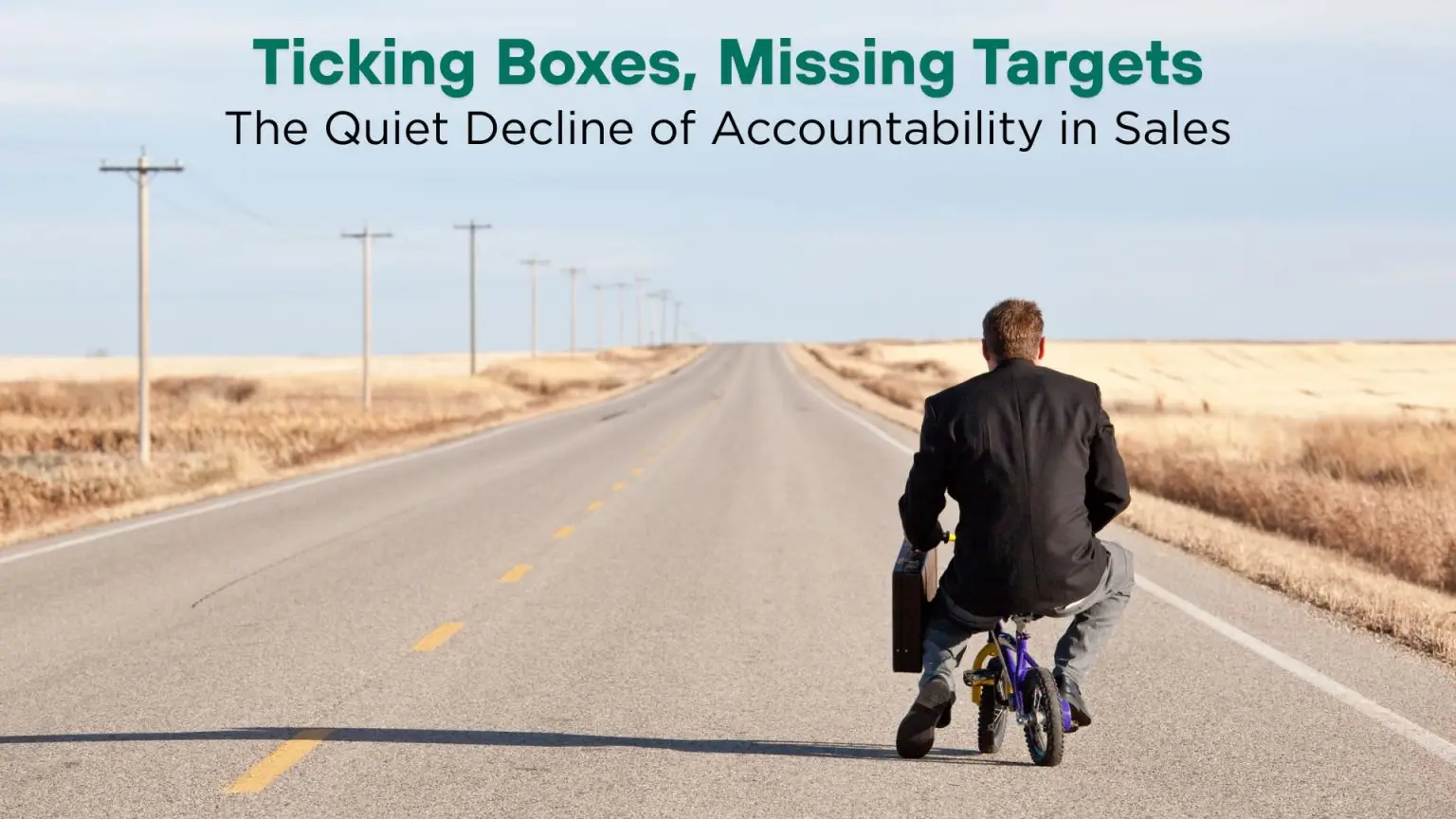
“It’s the classic trap of confusing activity with outcomes. A sales team might proudly tick off every OKR they have agreed upon and still miss revenue targets by miles.”
It’s also worth contemplating whether managers have grown too hesitant to hold firm on performance and have become a bit overcautious. With so much focus on culture, wellbeing, and flexibility, it’s easy to see how holding people firmly accountable for revenue can start to feel uncomfortable or even out of place. However uncomfortable, softening performance expectations too far doesn’t serve anyone well in the long run. A supportive culture still needs clear commercial boundaries to keep the business healthy and growing.
“Of course, selling today is harder, but at the end of the day, none of it matters if the numbers don’t move.”
Since COVID, buyers are being more cautious, decision-making is spread across buying committees, deals are taking longer, brand loyalties have fractured and there’s an unprecedented level of information and choice out there; and it’s tempting to soften your stance on accountability in response.
But don’t be sucked in…
- Someone still needs to own the number, their number.
- Someone still needs to be out there in the market, connecting and colliding.
- Someone still needs to create opportunities and close deals.
- Someone or everyone still needs to be held accountable.
- Someone still needs to be confident that revenue will grow.
So, if your team has drifted away from that, it might be time to ask yourself…
- Are we building a culture of accountability or a culture of activity?
- Do we have genuine salespeople in our business, or just order takers?
- Are we actually growing the business, or just keeping busy?
- Are our salespeople actually doing the work?
- Are we simply putting up vanity metrics?
- Is revenue still our ultimate scoreboard?
This doesn’t mean going back to old-school sales cultures where only hitting quota matters and it’s every man (or woman) for themselves. Smart businesses are finding better ways to balance sales accountability with a healthy culture.
Final Thought…
Confusing activity with sales outcomes is a big problem and it could be the biggest risk to your business. The real magic happens when people, performance and customer value are aligned under a truly sales-led growth model.
If this article resonates with you or you want to explore a sales-led growth model further, let’s have a chat. jamie@killerconsulting.com.au